
You Didn't Get Sentenced—But You're Serving Time Too
Having a loved one incarcerated changes everything. The phone calls,
the visits, the worry, the waiting. But here's something you can do
together: take the same course they're taking. Build shared language.
Have real conversations. Transform as a family.
You're Not Alone
Over 2.3 million people are incarcerated in the United States.
That means millions of mothers, fathers, children, siblings, and
partners are navigating the same confusion, grief, and hope you are.
The system separates families. It complicates communication. It
makes real connection harder.
But transformation doesn't have to be something that happens to
them while you wait. It can be something you do together—even
from different places.
When you take the same course your loved one is taking, you create
shared language. You understand what they're learning. You can ask
real questions. You can grow together.
That's what Beat The Streets offers families: a bridge.

THE NUMBERS
1 in 2 — Adults with an incarcerated family member
2.7 million — Children with a parent in prison
83% — Families who say communication is their biggest challenge
How to Support Their Transformation
Your loved one has access to Beat The Streets curriculum through
Edovo tablets inside their facility. You can access the same
curriculum online—for free. When you're both learning the same
material, everything changes.
SHARED LANGUAGE
When you both know what "the Circle Audit" means, or what the "S.T.O.P. protocol" is, your conversations go deeper. You're not just asking "how are you?"—you're asking "what did you learn this week?"
ACCOUNTABILITY PARTNER
Transformation is harder alone. When you're taking the same course, you become accountability partners. You can check in on each other's progress. You can push each other forward.
REAL CONVERSATIONS
Phone calls and visits are short. Don't waste them on small talk. When you're both doing the work, you can have conversations that matter—about who you're becoming, not just what happened today.
PREPARING FOR REUNION
Reentry is hard on families. When you've both been through the same transformation framework, you're building the foundation for a healthier relationship when they come home.
MODELING FOR CHILDREN
If children are involved, seeing both parents (or a parent and grandparent, aunt, uncle) committed to growth sends a powerful message. Transformation becomes a family value.
How It Works
Step-by-Step:
STEP 1: THEY ACCESS ON EDOVO
────────────────────────────────────────
Your loved one accesses Beat The Streets curriculum through
Edovo tablets inside their facility. They can work through
Seeds of Success, G.I.F.T., or Critical Game Theory at their
own pace.
STEP 2: YOU ACCESS ONLINE (FREE)
────────────────────────────────────────
You access the same curriculum through our website—completely
free. Download the PDF workbook or join our online community
on Skool for guided study.
[ACCESS FREE CURRICULUM →]
STEP 3: STUDY THE SAME WEEK
────────────────────────────────────────
Coordinate with your loved one to stay on the same week or
chapter. Seeds of Success is 9 weeks. G.I.F.T. is 13 weeks.
Even if you get out of sync, you'll both be learning the
same concepts.
STEP 4: TALK ABOUT IT
────────────────────────────────────────
During your next call or visit, discuss what you learned.
Ask questions. Share what challenged you. Hold each other
accountable. This is where transformation becomes relational.
STEP 5: GROW TOGETHER
────────────────────────────────────────
By the time they come home, you'll have shared vocabulary,
shared tools, and shared commitment to who you're both becoming.
That's a foundation you can build on.
ENCOURAGE THEM TO ACCESS THE CURRICULUM
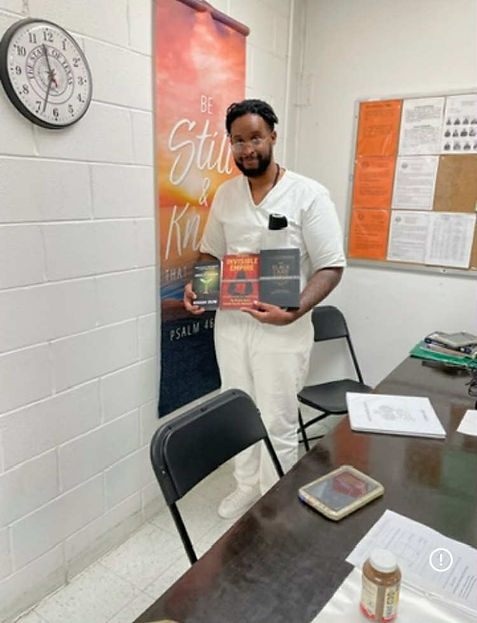
Our programs—Seeds of Success, G.I.F.T., and Critical Game Theory—are available on Edovo tablets inside participating facilities. Encourage your loved one to search for Beat The Streets 101 and start the journey.
STUDY TOGETHER
Download the same curriculum they're working through. Read along so you can discuss concepts during visits or phone calls. Shared language builds connection and accountability. [DOWNLOAD FREE CURRICULUM →]
ASK TRANSFORMATION QUESTIONS
Instead of "How are you?" try: - "What are you working on in the Seeds of Success program?" - "What's one thing you're doing differently this week?" - "What's the hardest part of the program for you?" These questions show you're invested in their growth, not just their survival.
SET BOUNDARIES WITH LOVE
Supporting transformation doesn't mean accepting everything. If they're not doing the work, you can say so. Accountability is love. "I love you, and I'm here for you when you're ready to put in the work."
PREPARE FOR REENTRY
Release is not the finish line—it's the starting line. Begin planning early: housing, employment, transportation, family dynamics, expectations.
Resources for Families
TAKING CARE OF YOURSELF
Having a loved one incarcerated is traumatic. You may experience:
- Shame and stigma
- Financial strain
- Anxiety and depression
- Relationship stress
- Grief (even though they're not gone)
This is normal. You're not weak for struggling.
Consider: - Therapy or counseling (many offer sliding scale fees)
- Support groups for families of incarcerated individuals
- Setting boundaries on phone calls, commissary, and visits
- Taking breaks when you need them
You cannot pour from an empty cup. Your wellbeing matters too.
TALKING TO CHILDREN
If children are involved, they need age-appropriate honesty:
- Sesame Street "Little Children, Big Challenges: Incarceration" Free videos, storybooks, and guides for children ages 3-8. Available in English and Spanish.
🔗 sesameworkshop.org/topics/incarceration
- See Us, Support Us (SUSU) Community and resources for children of incarcerated parents. Coordinated by the Osborne Association. 🔗 susu-osborne.org
- Prison Fellowship Angel Tree Christmas gifts, summer camps, sports clinics, and mentoring for children of incarcerated parents.
🔗 prisonfellowship.org/about/angel-tree
- Children of Promise NYC Programs and resources for children with incarcerated parents.
- Keep the relationship alive through letters, video visits (where available), and photos. Children need to know they're still loved.
FINDING YOUR PEOPLE — NATIONAL
You're not the only one going through this. Connect with others:
- Strong Prison Wives & Families National nonprofit with YouTube channel, online community, and private Facebook group "Invisible Shackles."
🔗 strongprisonwivesandfamilies.com
🔗 facebook.com/groups/StrongPrisonWives
- Prison Families Alliance Support meetings (online and in-person), youth programs ages 7-17, and family workshops. Monthly calendar of events.
- Loved Ones of Prisoners (LOOP) 24/7 phone support, transportation assistance, and resources.
- Extended Family Support system specifically for families of prisoners.
- FAMM (Families Against Mandatory Minimums) Advocacy, storytelling workshops, and policy updates for families impacted by harsh sentencing.
- Osborne Association Family visiting programs, advocacy, and the NY Initiative for Children of Incarcerated Parents.
- National Reentry Resource Center Federal resource hub for reentry information and family support.
TEXAS-SPECIFIC RESOURCES
- Texas Incarcerated Families Association (TIFA) The primary statewide advocacy organization for Texas families. Education, advocacy, legislative updates, and TDCJ navigation help.
🔗 tifa.org
- Texas Prisons Alliance Support, advocacy, and resources for justice-impacted families. Bilingual resources available (English/Spanish).
- Texas Prison Transparency Project Advocacy, awareness, and bridge-building between families and correctional staff.
- Texas Advocates for Justice (Grassroots Leadership) Organizing, leadership training, and community resources for formerly incarcerated individuals and their families.
🔗grassrootsleadership.org/texas-advocates-for-justice
- Texas Center for Justice and Equity State Capitol advocacy to end mass incarceration and reduce racial inequities.
Texas 211 Statewide resource hub for social services, housing, food assistance, and more.
- Bexar County Reentry Center (San Antonio) Local resources for justice-involved individuals and families.
🔗 bexar.org/3509/Reentry-Center
- Prison Entrepreneurship Program (PEP) Reentry support, education, and mentorship in Texas.
🔗 pep.org
UNDERSTANDING THE TDCJ SYSTEM
The criminal justice system is confusing by design. Learn how it works so you can navigate it:
- TDCJ Inmate Search Look up current location, projected release date, and status.
🔗 inmate.tdcj.texas.gov/InmateSearch/start
- TDCJ Offender Search (with notifications) Search by name, SID, or TDCJ number. Subscribe to status updates.
🔗 ivss.tdcj.texas.gov/offender-search-popups
- TDCJ Family Information Guide Official guide for families of inmates (PDF available in English and Spanish).
🔗 tdcj.texas.gov/ks_offender.html
- TDCJ GO KIDS Initiative Resources specifically for children of incarcerated parents. 🔗 tdcj.texas.gov/gokids
- TDCJ Rehabilitation and Reentry Division Information on reentry programs, ID documents, and the three-phase reentry process. Toll Free: (877) 887-6151
🔗 tdcj.texas.gov/divisions/rrd
- Texas Board of Pardons and Paroles Parole eligibility, conditions, and hearing information.
- Texas State Law Library — Families of Inmates Guide Comprehensive legal resource guide for mail, visitation, and navigating the system.
🔗 guides.sll.texas.gov/resources-family-inmates
Knowledge is power. The more you understand, the better you can advocate.
MANAGING THE FINANCIAL BURDEN
Incarceration is expensive for families. Be strategic:
- Set a monthly budget for commissary, phone, and visits — and stick to it. You can't help them if you're broke.
- Know when to say no. Requests can escalate. Boundaries are healthy.
- Save for release. The first 90 days out are critical. Having funds set aside for housing, transportation, and basics makes a difference.
- Watch for scams. If someone contacts you promising early release, legal help, or special treatment for money — it's almost certainly a scam.
- Access Corrections (for TDCJ) Send money to commissary securely.
🔗 accesscorrections.com
FINANCIAL EDUCATION — FOR YOU AND YOUR LOVED ONE
Financial literacy is one of the biggest barriers to successful reentry. We're building tools to change that—for families on the outside and individuals on the inside.
At Home VIDEO COURSES & CURRICULUM
Inside Hustle Network provides video-based financial education courses and curriculum available on our website, covering:
- Credit building and repair fundamentals
- How to read and dispute a credit report
- Building a credit stack from zero
- Business formation basics (LLC, EIN, banking)
- Budgeting for reentry: the first 90 days
- Avoiding predatory lenders and financial scams
Access courses anytime. Learn at your own pace.
🔗 beatthestreets101.com/courses
COMING SOON TO EDOVO
We're developing financial education curriculum for facility tablets so your loved one can start building knowledge before release. Topics will include:
- Credit 101: What it is, why it matters, how to build it
- Money management and budgeting basics
- Entrepreneurship fundamentals
- Avoiding common financial traps post-release
When they come home with a plan, the transition is smoother for everyone.
COMING SOON TO EDOVO
We're developing financial education curriculum for facility tablets so your loved one can start building knowledge before release. Topics will include:
- Credit 101: What it is, why it matters, how to build it
- Money management and budgeting basics
- Entrepreneurship fundamentals
- Avoiding common financial traps post-release
When they come home with a plan, the transition is smoother for everyone.
Preparing for Release
Release is a critical transition. The first 30-90 days are the
highest risk period for reoffending. Preparation starts now—
not the day they walk out.
HOUSING
Where will they live? Options include: - Family home (clear expectations before release)
- Transitional housing / halfway house - Reentry programs with housing components
Questions to answer:
- Is your home parole-compliant? (No weapons, certain restrictions may apply)
- Can you provide stable housing for 6-12 months minimum?
- What are the household rules and expectations?
EMPLOYMENT
- Identify reentry-friendly employers in your area
- Update or create a resume before release
- Consider entrepreneurship and self-employment options
- Know your state's "ban the box" laws
TRANSPORTATION
Without a license or car, getting to work, parole, and appointments is a major barrier.
- Can family provide transportation initially?
- Is public transit accessible?
-Can they get their license reinstated?
PAPERWORK
Before release, ensure they have (or can quickly obtain):
- State ID or driver's license
- Social Security card
- Birth certificate
- Any vocational certificates earned inside
- Release paperwork
REALISTIC EXPECTATIONS
Reentry is hard. Really hard. Expect:
- Adjustment period (sensory overload, decision fatigue)
- Identity reconstruction (they've changed; so have you)
- Potential setbacks (this is not failure) - Need for continued support (not just the first week)
The first week is not the hardest week. Weeks 4-12 often are.
FAMILY REUNIFICATION
If children are involved:
- Consider gradual reintroduction
- Establish new family rhythms
- Seek family counseling if needed
- Be patient—relationships need rebuilding
Take Action Today
DOWNLOAD THE CURRICULUM
Read along with them. Shared language builds connection.
SUPPORT THE MISSION
Help us expand programs and reach more families.
JOIN OUR COMMUNITY
Connect with other families on the same journey.
STAY CONNECTED
Read along with them. Shared language builds connection.